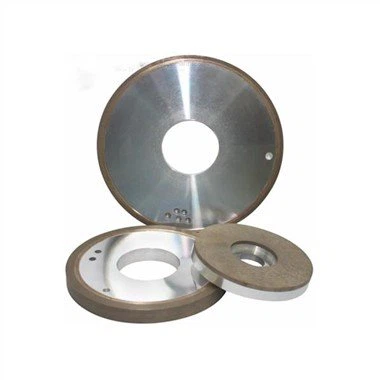

What are the common types of diamond tools? What are the characteristics?
Feb 17, 2022
Single crystal diamond tool

Single crystal diamond can be divided into natural single crystal diamond and synthetic single crystal diamond. Natural diamond, commonly known as diamond, is one of the hardest natural minerals first discovered by human beings. Most of the high-quality natural diamonds are regular octahedron or rhomboid dodecahedron, a few are hexahedron cubes or other shapes, light-colored and transparent, free of impurities and defects, has a large refractive index. During the First Industrial Revolution, natural single crystal diamond tools began to be used in the machining of clocks and precision instrument bearings, which greatly improved the machining accuracy.
Natural diamond tools are single-crystal large-particle diamonds that have been ground into a certain geometric shape and size, fixed on the toolbar or tool body by welding, bonding, machine-clamping or powder metallurgy, and then mounted on a precision machine tool to use on The natural single crystal diamond tool is finely ground, and the cutting edge can be extremely sharp, and the cutting edge radius can reach 0.002μm, which can realize ultra-thin cutting.
Coupled with the characteristics of small friction coefficient between it and the material to be processed, good adhesion resistance, small thermal expansion coefficient and high thermal conductivity, natural diamond tools can process extremely high workpiece accuracy and extremely low surface roughness. Therefore, natural diamond tool cutting is also called mirror cutting. Natural diamond tools are unanimously recognized, ideal and irreplaceable ultra-precision machining tools.
At present, the ultra-precision mirror cutting technology of natural diamond tools has developed rapidly, mainly used for ultra-finishing of special workpieces of copper and copper alloys, aluminum and aluminum alloys, and precious metals such as gold, silver, and rhodium, such as video recorder disks, optical plane mirrors, multi-faceted mirrors, quadratic mirrors, etc. However, because natural diamond is not only expensive, but also has limited resources and scarce supply, its application scope is limited.
Poly crystalline Diamond (PCD) Tool

Synthetic single crystal diamond was gradually developed after the 1950s. It is synthesized from graphite as a raw material, adding a catalyst, and undergoing high temperature and ultra-high pressure. Synthetic poly crystalline diamond (PCD) is a poly crystalline material obtained by polymerizing diamond micro-powders through metal binders (such as Co, Ni, etc.). Synthetic poly crystalline diamond is a special powder metallurgy product, and some methods and means in conventional powder metallurgy are used for reference in the manufacturing method.
During the sintering process, due to the addition of additives, a bonding bridge with Co, Mo, W, WC and Ni as the main components is formed between the PCD crystals, and the diamond is firmly embedded in the solid skeleton composed of the bonding bridge. The role of the metal binder is to firmly hold the diamond and give full play to the cutting efficiency of the diamond. In addition, due to the free distribution of grains in all directions, it is difficult for cracks to propagate from one grain to another, which greatly improves the strength and toughness of PCD. The following should be considered when selecting a binder.
① The holding power of the adhesive and the diamond.
② For a specific processing object, the coordinated wear of the binder and the diamond.
③ Proper manufacturing process and production cost
Natural diamond has a long history of being used to make cutting tools. Due to the high price of natural diamond, diamond is widely used in cutting processing after the successful development of poly crystalline diamond (PCD). Since the early 1970s, GE has successfully developed it. After the poly crystalline diamond (PCD) blade, natural diamond tools have been replaced by synthetic poly crystalline diamond in many occasions.
Although the hardness of PCD is lower than that of single-crystal diamond, PCD is an isotropic material, which eliminates the need for preferred orientation in tool manufacturing. Due to the conductivity of the PCD binder, PCD is easy to cut and shape, and the source of PCD raw materials is abundant, and the cost is much lower than that of natural diamond. Therefore, the application of PCD is far wider than that of natural diamond tools.
CVD diamond tool

CVD diamond refers to the synthesis of diamond films on heterogeneous substrates (hard alloys, ceramics, etc.) by chemical vapor deposition (CVD). CVD diamond does not contain any metal or non-metal additives. Therefore, the performance of CVD diamond is very similar to that of natural diamond near. CVD diamond tools not only directly impact the market of powder-coated carbide tools and ceramic tools, but also become a strong competitor of PCD tools.
The super hard wear resistance and good toughness of CVD diamond tools make it possible to process most non-metallic materials and multiple non-ferrous metal materials, such as aluminum, silicon aluminum alloy, copper, copper alloy, graphite, ceramics and various reinforced glass fibers and Cash out as structural materials, etc. CVD diamond tools can also be used for high-efficiency and high-precision machining tools. Its cost is much lower than that of expensive natural diamond tools.
At present, CVD diamond tools are not only used for the processing of aluminum alloy materials for engine pistons, but also for internal combustion engine cylinder blocks, cylinder heads, high-pressure oil pumps, gasoline pumps, water pumps, generator rotors, starters, and FRP components in automobile bodies. Turning, milling, drilling, boring, etc. Typical CVD diamond tool products include KD100 inserts from Kennametal KDF300 grades of CVD diamond-coated carbide end mills, etc.